In the heart of Cozumel’s crystal-clear waters, a captivating spectacle awaits sea lovers and scuba divers: encounters with majestic rays gliding gracefully through their natural habitat. This Mexican island, renowned worldwide for its ecological richness, boasts a completely preserved marine ecosystem where biodiversity flourishes in all its splendor. Navigating its seabed is like diving into a world where rays, among other fascinating species, share the waters with exceptional marine life. These encounters, sometimes unexpected, shed light on the fragile symbiosis between the ocean and its inhabitants, offering a privileged glimpse into the beauty and complexity of underwater life.
Discover the mysteries of Cozumel’s rays on this immersive journey, exploring their behavior and the unique characteristics of their underwater environment. The richness of this destination transcends mere tourism: it’s an invitation to understand and protect these precious spaces. From freediving to more technical expeditions, all approaches allow you to immerse yourself in an ecosystem that engages in a profound dialogue with the very essence of marine nature. For visitors wishing to delve deeper into this exploration, it’s recommended to enlist the services of snorkeling experts who offer in-depth guided experiences, allowing you to admire these creatures while respecting their fragile habitat.
Rays in Cozumel: a jewel of marine biodiversity in the Caribbean
The presence of rays in the waters of Cozumel reflects the incredible marine biodiversity that this region of the Caribbean offers. The island benefits from the protection of the Mesoamerican Reef System, the second largest barrier reef in the world, which shapes a dense and varied marine habitat, home to an immense variety of species. Rays are among the most spectacular inhabitants of these reefs. Their broad and elegant silhouette, often compared to that of an outstretched wing, glides slowly above the coral reefs, living camouflage in this environment where each species plays a crucial ecological role.
Distinguishing between different species of rays is essential to understanding their behavior. In Cozumel, the reef manta ray is the most frequently observed during dives and snorkeling excursions. This species feeds primarily on plankton, which it captures with its large mouth while swimming gently in the currents. Other species, such as the stingray and the eagle ray, are also present, sometimes seen in spectacular schools above the seabed. These animals require a healthy marine habitat, rich in food and offering protected areas for interaction, reproduction, and rest.
The exceptional water quality around Cozumel, combined with the diversity of its coral reefs, provides an ideal setting for these creatures. Many divers report that scuba diving in Cozumel allows you to fully experience this, in visibility often exceeding 30 meters. This water clarity makes it possible to observe not only rays, but also a multitude of tropical fish, starfish, and of course, the rich seabed that forms the foundation of the local ecosystem.
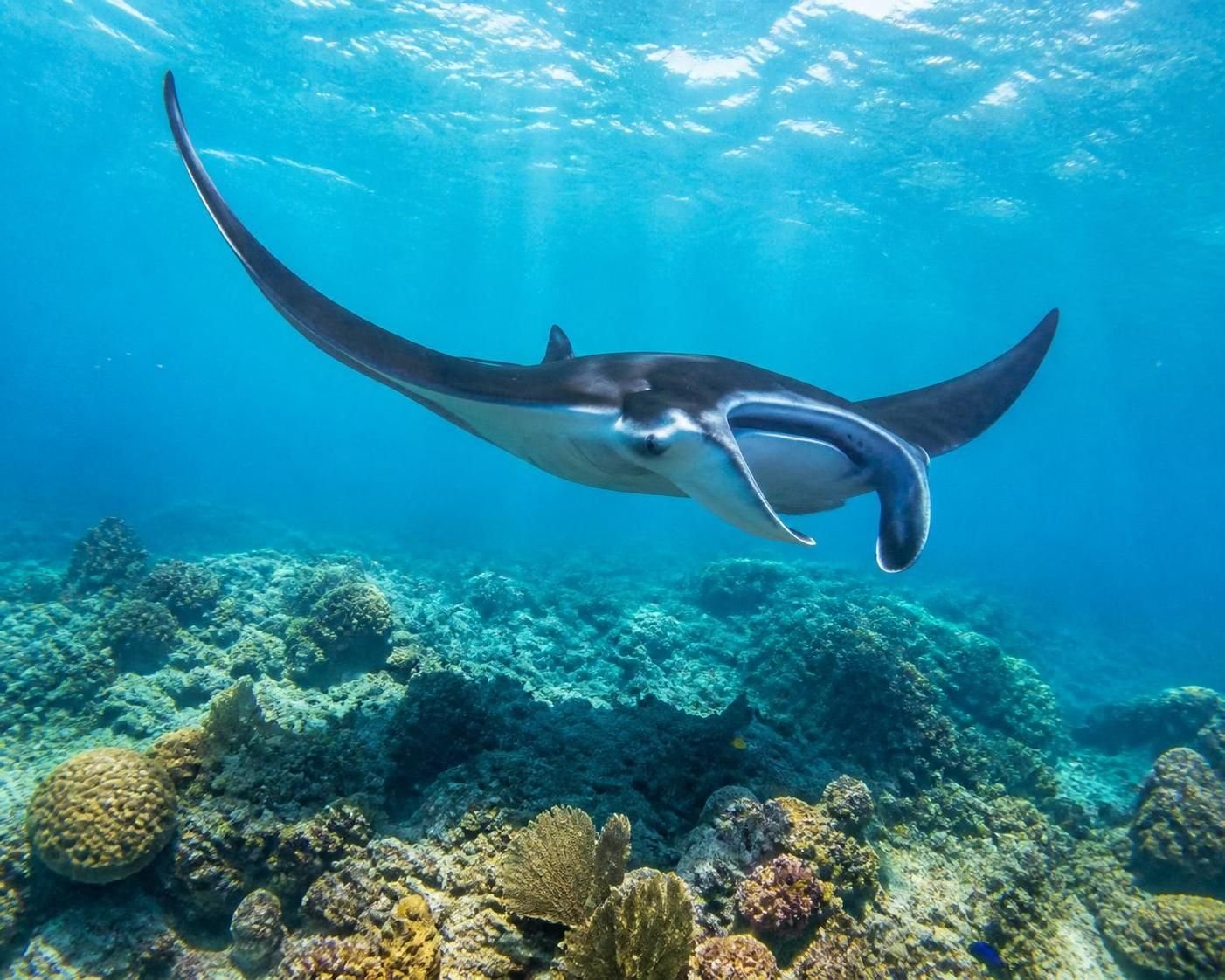
Diving and snorkeling: discover the rays and their underwater ecosystem in Cozumel
Activities around Cozumel offer an unparalleled immersion in the natural habitat of rays. Whether it’s a simple snorkeling trip or a more in-depth scuba dive, visitors have the unique opportunity to swim alongside these fascinating creatures, while respecting the site’s delicate ecological balance. Specialized centers organize excursions where experienced guides advise and accompany tourists, ensuring a respectful interaction with marine life.
The El Cielo site, in the south of the island, is particularly renowned for its diverse marine life and the frequency of stingray sightings. This “underwater sky,” as its name suggests, offers shallow waters and perfect visibility for admiring schools of multicolored fish and rays that live in harmony with their environment. This area is also a refuge for sea turtles, making El Cielo an exceptional place to observe various iconic species.
For those who want a more personalized and immersive experience, there are services available.Private group catamaran excursions in Cozumelwhere nature is close at hand, far from the crowds. These excursions not only allow you to discover marine wildlife, but also to better understand the complex interactions of the ecosystem and the importance of its preservation. With an expert guide, every movement in the lagoon or above the reefs becomes a true lesson in marine ecology.
Here is a list of the most recommended activities for observing rays in their habitat in Cozumel:
- Snorkeling at El Cielo to spot stingrays and starfish on sandy bottoms.
- Scuba diving at Punta Sur and Santa Rosa Wall sites, where manta rays are often seen gliding majestically above the reef.
- Catamaran excursions with specialist guides for exclusive outings away from the crowds.
- Respectful observation of the nocturnal behavior of rays during technical dives, promoting minimal contact.
- Participation in education and conservation programs organized by local diving centers.
The specific characteristics of the marine habitat of rays on the seabed of Cozumel
The natural habitat of rays is intimately linked to the unique characteristics of Cozumel’s seabed. These underwater spaces are composed of coral reefs, sandy bottoms, and seagrass beds, forming a rich and complex ecosystem. This mosaic allows rays to move through areas suited to foraging, reproduction, and protection from predators. The seabed acts as a true refuge, ensuring the survival of marine species.
Manta rays, for example, particularly favor areas with high plankton concentrations, generally brought by regular ocean currents. These currents have a major influence on water quality and food availability, making certain areas, such as Santa Rosa Wall, especially attractive. In contrast, stingrays tend to frequent sandy bottoms and shallow lagoons, where they can easily camouflage themselves and feed on small invertebrates.
A summary table of the different species of rays and their specific habitats in Cozumel:
| Species | Preferred habitat | Food | Behavior |
|---|---|---|---|
| Reef manta ray (Mobula alfredi) | Deep reefs, open waters near Santa Rosa Wall | Plankton filtered while swimming | Whether alone or in small groups, annual attendance |
| Stingray | Shallow sandy bottoms, lagoons | Invertebrates and small fish | It often camouflages itself against the sand, and is active at night. |
| eagle ray | Underwater reefs and slopes | Fish and small invertebrates | Spectacular bank formations |
The strict protection of these habitats is a central concern for local communities. Reputable dive centers scrupulously respect the prohibitions against touching rays or disturbing the reefs, helping to maintain the natural balance of this precious ecosystem.
The ecological challenges surrounding the preservation of rays and their natural habitat in Cozumel
The conservation of rays in Cozumel cannot be separated from the overall protection of the marine habitat and the biodiversity that thrives there. Faced with increasing pressures from tourism, human activities, and climate change, the survival of these iconic species depends on concerted efforts and sustainable management.
The natural parks surrounding Cozumel, particularly the Punta Sur Marine Protected Area, impose strict regulations aimed at minimizing human impact on the seabed and marine life. Limiting the number of divers, prohibiting the removal of or contact with marine animals, and monitoring water quality are all measures that ensure long-term balance. These initiatives also encourage awareness and education among visitors, which are essential for responsible tourism.
Rays, as indicator species, reflect the overall health of the marine ecosystem. Their presence (or absence) signals the health of the oceans, particularly in terms of pollution or habitat degradation. Therefore, careful observation of them is a valuable source of scientific information and a tool for promoting environmentally responsible practices.
To further explore this marine adventure while fully respecting the environment, enthusiasts can opt for specific excursions, such as the one offered in the exceptional natural site of El Cielo in CozumelThese outings offer an enriching immersion and support local marine conservation projects.
When is the best time to see rays in Cozumel?
Manta rays can be seen all year round in Cozumel; however, between November and May, when the waters are slightly cooler and rich in plankton, their appearances are more frequent, offering ideal conditions for diving and snorkeling.
Is it possible to touch the rays during snorkeling or diving trips?
It is strictly forbidden to touch the stingrays. Their mucous membranes protect them from infections, and any human contact can be dangerous. Guides and professional centers systematically remind visitors of this rule to preserve their health and well-being.
What is the difference between a manta ray and a stingray?
The manta ray is a large species that feeds mainly on plankton and lives in deep or open waters. The smaller stingray inhabits mostly shallow sandy bottoms and feeds on invertebrates, often being active at night.
What diving levels are required to observe rays in Cozumel?
Snorkeling allows swimmers of all levels to easily observe stingrays in the shallow waters of El Cielo. To see the majestic manta rays, more technical scuba dives are recommended, accessible to certified divers with significant experience.