The Cozumel Marine Protected Area stands out as a true natural gem in the heart of the Mexican Caribbean. This remarkable area, part of the island’s Biosphere Reserve, captivates visitors with its ecological richness, unique ecosystem, and impressive marine life. Cozumel, with its crystal-clear waters and unparalleled coral reefs, offers a paradise for scuba diving and ecotourism enthusiasts. This protected area has become a vital pillar for the conservation of numerous marine species, while maintaining a close connection with local culture and the sustainable activities of the island community.
For several decades, this natural area has benefited from special attention aimed at preserving its exceptional biodiversity. The largest coral reef sanctuary in Mexico, Arrecifes de Cozumel National Park is home to spectacular coral gardens, fascinating underwater tunnels, and diverse wildlife ranging from sea turtles to nurse sharks. Visitors discover unspoiled nature and find a balance between adventure and respect for the environment. The protected marine area, accessible by boat from San Miguel de Cozumel, delights divers, snorkelers, and kayakers, offering unique experiences in a pristine setting.
History and conservation of the Cozumel marine protected area, a preserved natural treasure
The history of the Cozumel Marine Protected Area testifies to a sustained commitment to the conservation of an exceptional natural heritage. Established in 1996, the Arrecifes de Cozumel National Park responded to the urgent need to protect a fragile reef system, whose fascinating ecosystems have evolved over millennia. This park is an integral part of the Mesoamerican Reef System, the second largest coral reef complex in the world. Its ecological importance extends far beyond the region and represents a vital hub for marine biodiversity.
Coral reefs, veritable living structures shaped over centuries, provide an essential habitat for hundreds of species. They are home to hard and soft corals, gorgonians, and an impressive variety of tropical fish, crustaceans, mollusks, and marine mammals. Meanwhile, mangroves and coastal lowland forests play a crucial role in maintaining water quality and serve as refuges for both terrestrial and aquatic wildlife.
Beyond their ecological value, these ecosystems symbolize a rich cultural history. For the inhabitants of Cozumel, the reefs are central to their identity, a source of livelihood through traditional fishing, and an economic driver through ecotourism. The local community is committed to a carefully controlled balance between tourism and environmental protection, thus ensuring the long-term sustainability of this marine sanctuary.
Conservation efforts are coordinated by the National Commission for Natural Protected Areas (CONANP), which actively monitors the health of the reefs and implements education and awareness programs. Visitors are encouraged to adopt responsible behavior to preserve this fragile natural environment. This harmonious coexistence between humans and nature makes the Cozumel Marine Protected Area a model of sustainable conservation within the framework of responsible tourism.
Environmental awareness has intensified in recent years, particularly in the face of threats such as climate change, pollution, and increasing tourism. Respecting park rules, such as the prohibition against touching corals or disturbing marine life, has become essential to protecting the reefs’ development. The marine protected area is thus becoming a living laboratory where innovative marine conservation methods are being tested, combining science, tradition, and ecotourism.
How to access the Cozumel Marine Protected Area: logistics and practical advice for visitors
Located off the west coast of Cozumel Island, the marine protected area is easily accessible from San Miguel de Cozumel, the island’s tourist hub. Most excursions depart from this bustling port, with operators offering numerous boat trips suitable for both experienced divers and snorkeling novices. These boat trips are short, but it’s advisable to take certain precautions due to the variable winds and sea conditions.
To fully enjoy your visit, it is recommended to book in advance with certified operators. This choice guarantees not only safe access but also adherence to ecotourism practices and conservation protocols mandated by CONANP. Catamaran excursions are particularly popular, offering a comfortable and environmentally friendly way to discover this marine paradise. For those wishing to delve deeper into these adventures, there are options to combine scuba diving, snorkeling, and even kayaking on itineraries designed to explore the diverse reefs and beaches surrounding the island.
In addition to classic excursions, some tours offer exciting encounters with local wildlife, such as rays or nurse sharks, which are an integral part of this remarkable ecosystem. Discover the rays of Cozumel and their natural habitat is an unforgettable experience for any visitor. Beginner snorkelers will also find valuable advice on how to get started safely with this activity thanks to expert guides, offering sites suitable for all levels (Discover how to start snorkeling in Cozumel).
Here are some essential tips to prepare for your visit to the marine protected area:
- Choose the dry season between November and April to ensure optimal visibility and calm sea conditions.
- Bring your own diving equipment or rent it from reliable operators in Cozumel.
- Strictly adhere to the guidelines for no contact with marine wildlife and coral.
- Opt for eco-friendly services to support local conservation and sustainable tourism.
- Prepare for diving or snorkeling sessions early in the morning, when the waters are calmest.
Accessing this exceptional natural site while respecting the logistical advice enhances the experience and contributes to the protection of a unique natural heritage. Interacting with local guides, who often share their knowledge of the flora and fauna, enriches the discovery and offers an immersive approach within this complex ecosystem.
Exceptional biodiversity in the Cozumel marine protected area: an ecological treasure to be preserved
The biodiversity of Cozumel’s marine protected area is among the most remarkable in the Caribbean. More than 260 species of fish inhabit its turquoise waters, accompanied by an impressive array of corals, crustaceans, mollusks, and various other forms of marine life. Every dive or snorkeling trip reveals a living theater where flora and fauna coexist in delicate harmony.
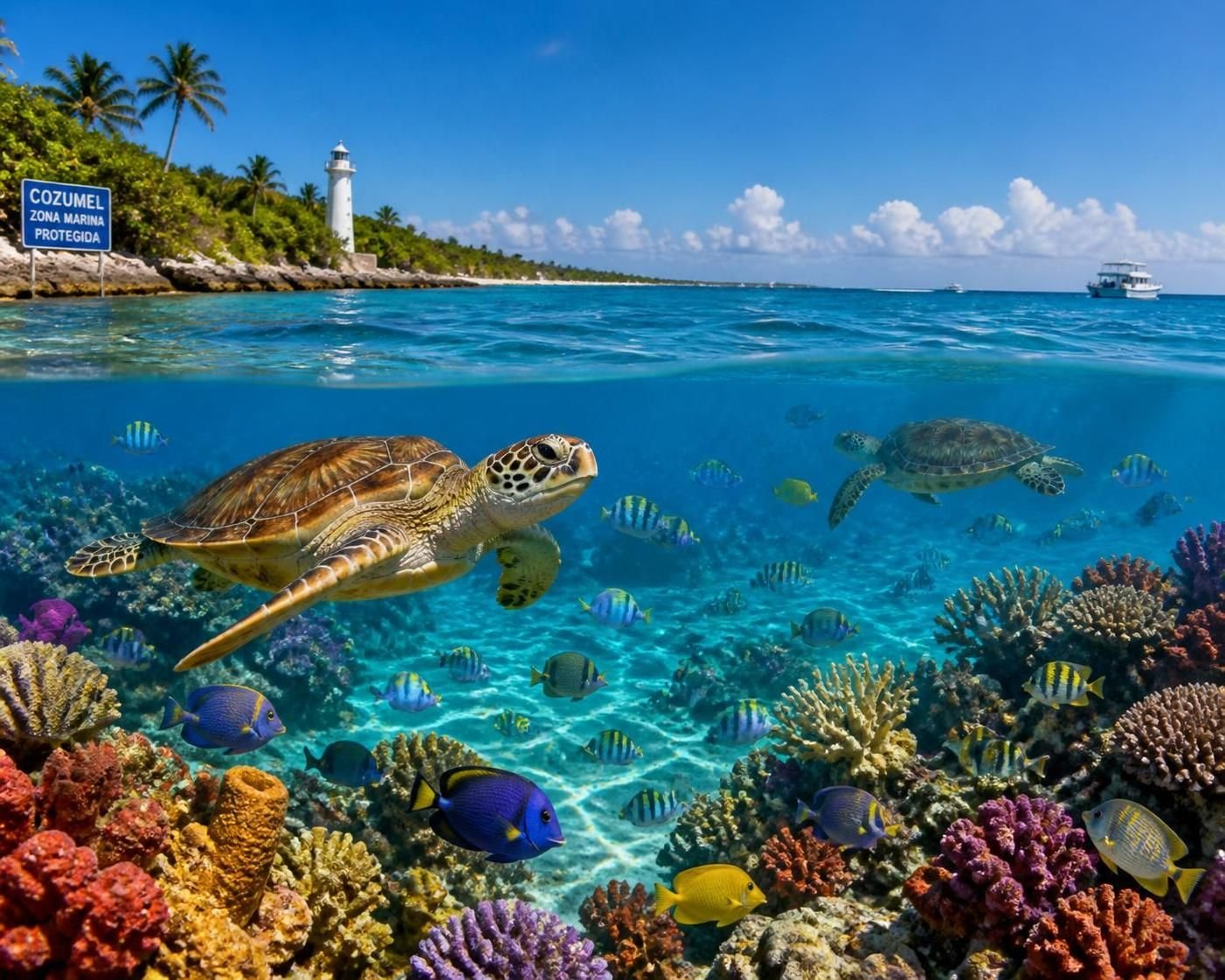
Among the iconic species, the sea turtle holds a special place. Several turtle species, including the green turtle and the hawksbill turtle, find vital habitat in the reefs of Cozumel for feeding and breeding. The park is also a refuge for endangered species such as the blue crab. The coral gardens provide shelter for parrotfish, angelfish, groupers, and many other colorful inhabitants of the sea.
Another fascinating element of this ecosystem is the regular presence of nurse sharks, impressive animals that are harmless to humans and can be observed by visitors at certain times of day. These encounters contribute to Cozumel’s international reputation as a leading destination for eco-diving. Responsible observation ensures the protection of these species while raising awareness among visitors about their importance in the marine food chain.
Protecting this biodiversity also involves safeguarding adjacent terrestrial ecosystems, such as the mangroves that filter the water and provide habitat for numerous bird species. Cozumel is thus a place where aquatic and terrestrial environments intertwine to create a mosaic of interconnected ecosystems. These complex interactions reinforce the natural balance and ecological appeal of the region.
Table of remarkable species present in the marine protected area:
| Species type | Emblematic species | Ecological role |
|---|---|---|
| Corals | Brain coral, Star coral | Reef formation, habitat for marine wildlife |
| Pisces | Parrotfish, Grouper, Angelfish | Algae removal, maintaining reef balance |
| Marine mammals | Manta rays, Nurse sharks | Predation and species regulation |
| Crustaceans | Blue crab | Recycling organic matter, substrate for corals |
| Sea turtles | Green turtle, Hawksbill turtle | Seagrass bed control |
Discovering the biodiversity of Cozumel’s marine protected area means exploring a natural paradise where every organism contributes to maintaining a delicate balance. This spectacular richness attracts nature lovers and encourages responsible tourism that supports conservation. For those passionate about marine adventures, numerous snorkeling and diving excursions offer the opportunity to fully experience this ecological immersion.
Must-see activities and ecotourism experiences in the Cozumel Marine Protected Area
The unique diversity of Cozumel’s marine protected area offers a multitude of activities for both nature enthusiasts and experts. Scuba diving is one of the highlights. The dive sites, with their steep and colorful coral walls, attract thousands of divers every year. Gentle currents are ideal for drift diving, allowing for a dynamic exploration of the coral gardens and their inhabitants.
For those who prefer to stay on the surface, snorkeling is ideal. Routes are specially designed for beginner and experienced snorkelers, offering the unique chance to see turtles, rays, and even nurse sharks up close in a peaceful and safe environment. This catamaran and snorkeling adventure in Cozumel is particularly appreciated for its combination of comfort and natural encounter.
In addition to water sports, other leisure activities like kayaking offer a different way to explore the coastline and observe wildlife. On land, nature walks and birdwatching round out this range of environmentally friendly activities. Ecotourism in Cozumel is built on a strong commitment: appreciating natural beauty while preserving fragile ecosystems.
Visitors can therefore choose from several options to discover this natural paradise:
- Guided dives including briefings on local biodiversity and conservation guidelines.
- Small group snorkeling excursions to minimize impact on the ecosystem.
- Days spent on a catamaran with stops in protected areas and swimming among marine wildlife.
- Bike tours around the island combining nature and local culture.
- Educational workshops on reef preservation and marine life, accessible to children and adults.
These activities contribute to a rich and balanced experience, where each visitor becomes an active participant in conservation. Direct contact with nature leads to an intimate understanding of the ecosystem and its challenges, all while enjoying an idyllic and peaceful setting.
Current and future commitments to conservation in the Cozumel Marine Protected Area
In Cozumel, the protection of this exceptional marine ecosystem relies on a complex network of stakeholders. CONANP, local communities, and various international organizations are joining forces to ensure the long-term sustainability of the Arrecifes de Cozumel National Park. These partnerships have resulted in concrete measures such as continuous reef monitoring, restrictions on navigation by zone and season, and the implementation of educational programs.
Despite these efforts, several threats remain. Climate change is affecting water temperatures and causing coral bleaching, sometimes irreversible. Even controlled tourism requires strict regulation to prevent overcrowding and habitat degradation. Marine pollution, particularly from plastics and chemicals, also poses a major challenge to reef health.
In response to these challenges, innovative initiatives are emerging. Some include the development of coral reefs for ecological restoration, the integration of advanced monitoring technologies, and the promotion of sustainable tourism through environmental certifications. These actions rely on strong local and international awareness, generating a positive impact on conservation.
Summary table of the main challenges and solutions applied:
| Ecological challenge | Consequence | Conservation measure |
|---|---|---|
| Climate change | Coral bleaching and mortality | Coral revitalization through nurseries and restoration practices |
| Overcrowding of tourists | Degradation of marine habitats | Limiting the number of visitors and regulating access |
| Marine pollution | Deterioration of water quality and risks to wildlife | Clean-up programs and awareness campaigns |
The Cozumel Marine Protected Area is a dynamic example of how science, local management, and citizen involvement converge to guarantee a sustainable future. Visitors, invited to become ambassadors for this cause, actively contribute to the preservation of this natural treasure while enjoying a setting of rare beauty.
What is the best time to visit the Cozumel Marine Protected Area?
The ideal time is between November and April during the dry season, when the waters are calm and visibility is optimal for diving and snorkeling.
How can I access the Arrecifes de Cozumel National Park?
Access is mainly by boat from San Miguel de Cozumel, with regular departures organized by certified local operators.
Is it possible to observe iconic animals such as turtles and rays?
Yes, the marine protected area is home to several iconic species that can be observed while diving or snorkeling, including sea turtles, rays and nurse sharks.
What precautions should I take during my activities in the marine protected area?
It is essential to respect the park rules: do not touch the corals or the fauna, avoid leaving waste, and follow the advice of the guides to minimize your ecological impact.
What types of activities are offered in the marine protected area?
The main activities include scuba diving, snorkeling, catamaran excursions, coastal kayaking and marine wildlife observation.