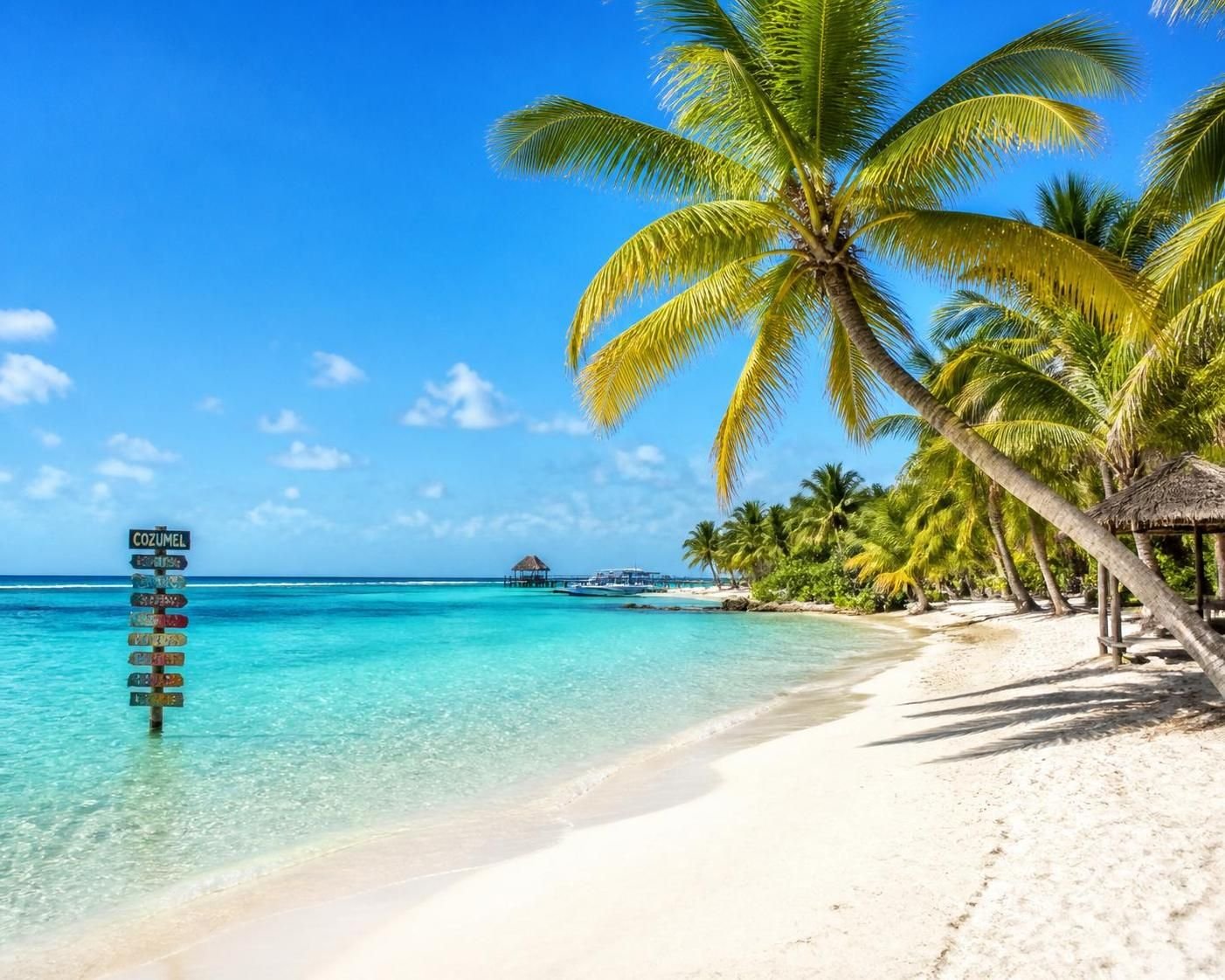
Against the luminous backdrop of the Caribbean Sea, the island of Cozumel boasts beaches of rare beauty, where fine sand plays with the turquoise reflections of the water. This Mexican paradise, accessible in just half an hour by ferry from Playa del Carmen, offers a unique experience blending relaxation, unspoiled nature, and immersion in a magnificent marine world. In contrast to the relentless tide of visitors to the mainland Riviera Maya, Cozumel stands out with its tranquil pace, inviting a more responsible form of tourism, closer to authentic nature. From its wild beaches in the east to the well-equipped beach clubs in the west, each shoreline tells a story, reveals a hidden treasure, or offers a quiet corner to enjoy a vacation with your toes in the sand.
This island is also a must-see for snorkeling and diving enthusiasts, thanks to a protected coral reef teeming with vibrant marine life. In Cozumel, the beaches are more than just places to relax; they are gateways to unforgettable underwater adventures, from encounters with starfish to dives among turtles and barracudas. Visitors find a perfect balance between nautical exploration and moments of pure relaxation, a blend that captivates year after year those who wish to reconnect with nature in its Caribbean setting.
With its diverse coastline, ranging from perfectly manicured beaches to virtually untouched wilderness, Cozumel stands out as a prime destination for experiencing the magic of Mexican paradise. Uncovering the secrets of its most beautiful beaches also means understanding why this island remains one of the best-preserved natural gems of the Riviera Maya, promising precious moments under a generous sun amidst a delicate yet vibrant natural environment.
In short:
- Cozumel offers a wide range of beaches, from the wild side in the east to the luxurious beach clubs in the west.
- A prime destination for the snorkeling and diving on the second largest coral reef in the world.
- El Cielo and the Palancar reef are among the most spectacular marine sites, accessible by excursions.
- Sargassum, a seasonal phenomenon, mainly affects the east coast, sometimes making swimming difficult.
- The Punta Sur ecological park offers a complete immersion between preserved beaches, nature and Mayan culture.
- Easy access via ferries from Playa del Carmen makes Cozumel ideal for a relaxing and discovery-filled stay.
Explore the idyllic beaches of Cozumel: between fine sand and the Caribbean Sea
The uniqueness of Cozumel’s beaches lies first and foremost in their diversity. Here, the fine, almost immaculate white sand contrasts magnificently with the turquoise waters of the Caribbean Sea. The island’s west coast is the most developed, lined with chic beach clubs and hotels offering direct access to beaches where you can relax while enjoying cocktails and a sophisticated atmosphere. Among the most renowned, the Buccanos Beach Club offers an intimate setting, a small, tranquil beach just minutes from San Miguel, the main town, ideal for combining relaxation with easy access to amenities.
Nearby, The Cabana Beach offers a unique experience with fully equipped private cabanas. It’s also a prime gateway to Chankanaab Marine Park, renowned for its easily accessible snorkeling spots and freshwater cenotes, perfect for a refreshing swim in a stunning natural setting. The Cozumel Beach Club in Playa Palancar also attracts many visitors eager to combine an accessible beach with immersion in one of the most remarkable reef areas.
Leaving the west coast and venturing east, nature reclaims its territory. The beaches are long, sparsely populated, and swept by a constant wind, creating waves ideal for surfing or kitesurfing, particularly at Punta Morena and Punta Chiqueros. This coastline is very popular with water sports enthusiasts and hikers who prefer undeveloped beaches where only birds and nature reign supreme. It should be noted, however, that the sargassum seaweed phenomenon can sometimes make swimming difficult on this coast. This seasonal phenomenon, linked to ocean currents, fortunately only moderately affects the west coast, where most of the tourist infrastructure is concentrated.
In the north, the difficulty of accessing certain beaches contributes to their almost pristine state. Isla de la Passion, accessible only by boat, stands out for its exceptional natural setting and minimal development, perfect for a getaway far from the hustle and bustle. The catamaran crossing to reach these secluded beaches is an activity in itself, an opportunity to discover the raw beauty of this protected area.
Finally, to the south, the Punta Sur Ecological Park boasts two of Cozumel’s most beautiful beaches, accessible for a small entrance fee. These beaches offer a double advantage: they allow visitors to combine the pleasures of sand and clear water with unique natural discoveries, such as encounters with protected wildlife, lagoons teeming with crocodiles and birds, or visits to Mayan sites. The Punta Sur Trail also leads to the observation tower overlooking the X’tacun Lagoon, offering a splendid panoramic view of the surrounding landscapes.
Underwater immersion: snorkeling and diving on the preserved reefs of Cozumel
Cozumel’s main attraction lies in its exceptional underwater world. The coral reef surrounding the island, the second largest in the world, remains a magnificent sanctuary for divers and snorkelers from around the globe. Here, visibility is often excellent, revealing an impressive marine diversity including multicolored corals, sponges, turtles, rays, and schools of tropical fish.
The El Cielo area, famous for its unique starfish on a bed of white sand, invites you to discover an almost magical place. Despite its renown, this site can sometimes be crowded, making small group excursions preferable to help preserve this gem. For a memorable snorkeling experience, it’s advisable to plan your visit and choose environmentally friendly tours. You can discover fascinating and rare details about El Cielo by following this link: El Cielo and its exceptional starfish.
In addition, Palancar Reef is a prime spot for snorkelers. Its varied topography, a mix of hard and soft corals, its rich seagrass beds, and its lower visitor numbers make it a privileged place to swim alongside sea turtles and sometimes even a nurse shark. This reef testifies to the ecological importance of Cozumel and the ongoing efforts to protect it, incorporating marine protected areas that guarantee abundant and vibrant biodiversity.
Further southeast, the Casablanca/Columbia Reef impresses with its depths and the size of its coral formations. A dive here often reveals another facet of the underwater world, with more diverse fauna and spectacular underwater landscapes where light plays with the topography.
For those who wish to experience underwater exploration without getting wet, the submarine diving offered by Atlantis Submarine is a fascinating alternative. This unique device allows for a gentle dive to depths of up to 30 meters, where passengers can admire reefs, fish, and even a historic shipwreck in complete comfort, without experiencing ear pressure.
- El Cielo white sand, starfish, crystal-clear waters
- Palancar Reef High-quality snorkeling with diverse marine wildlife
- Casablanca Reef / Columbia : deeper depths, rich marine life and impressive coral formations
- Atlantis Submarine : scuba diving accessible to all, an unforgettable experience
The Cozumel coast: beach, relaxation and exclusive experiences in beach clubs
Cozumel’s developed beaches, primarily on the west coast, combine modern comforts with natural beauty. Beach clubs like Buccanos offer a chic experience just minutes from the town center, allowing visitors to enjoy top-notch service, delicious local cuisine, and crystal-clear water ideal for swimming and relaxation.
Another must-see is The Cabana Beach, which offers strategically placed private cabins, inviting you to a more intimate stay in a pristine natural setting. This location also excels thanks to its direct access to Chankanaab National Park, where snorkeling and swimming in cenotes add a unique dimension to your beach getaway.
For those who prefer a more active atmosphere, Playa Palancar is a lively beach, popular for its snorkeling spots and friendly vibe, although it can get a bit crowded. It remains an excellent choice for combining beach time, water sports, and cultural exchange in a festive and welcoming setting.
Beyond the developed coastline, Cozumel’s wild and windswept east coast captivates with its authentic landscapes where nature sets its own pace. This area is ideal for kitesurfing and surfing enthusiasts, or simply for those who wish to explore deserted beaches and breathe in the fresh sea air. Punta Morena and Chen Rio are names to remember for discerning watersports lovers.
| Beach Club | Location | Main Features | Recommended activities |
|---|---|---|---|
| Buccanos Beach Club | West coast, near San Miguel | Chic atmosphere, intimate beach, clear water | Relaxation, upscale dining, swimming |
| The Cabana Beach | West coast, access to Chankanaab Park | Private cabins, natural surroundings | Snorkeling, cenote swimming, privacy |
| Palancar Playa | West coast, Palancar reef access | Lively, busy beach | Snorkeling, water sports, festive atmosphere |
| Punta Morena | East Coast | Waves, strong wind, wild beach | Surfing, kitesurfing, nature walks |
| Passion Island | North, accessible by boat | A pristine island, an intimate atmosphere | Relaxation, catamaran excursions |
Punta Sur Ecological Park: Discover unspoiled beaches and natural treasures
In the south of the island, the Punta Sur Ecological Park offers an invitation to a different kind of tourism: sustainable exploration. This park provides an exceptional space where fine sandy beaches lie alongside lagoons, forests, and archaeological sites. The discipline imposed here contrasts sharply with the frenetic pace sometimes found elsewhere on the Riviera Maya, allowing visitors to reconnect deeply with Mexican nature.
The site includes the Celarain Lighthouse, offering an unforgettable panoramic view of southern Cozumel, as well as several observation trails providing opportunities to get close to local wildlife, such as crocodiles and numerous rare bird species. Chunchacab Beach, renowned for its calm waters and access to the Colombia Reef, is an ideal spot for snorkeling in a protected environment.
The El Caracol archaeological site is also located here, with modest but historically rich Mayan remains. The park owes its quality to a balanced approach that combines ecosystem conservation with well-designed tourism offerings, making it a must-see for anyone wishing to understand the many facets of Cozumel.
Here’s what you can visit and observe in this exceptional park:
- Celarain Lighthouse for a spectacular panorama
- X’tacun Lagoon for bird and crocodile watching
- Chunchacab Beach for pristine snorkeling
- El Caracol archaeological site testimony of Mayan culture
- Nature trails leading to a cenote ideal for discovering local wildlife
Come early in the morning to enjoy an almost solitary experience in the heart of this unspoiled nature, far from the crowds, where every sound becomes a melody of wildlife. For those who prefer a more active approach, an electric bike tour allows you to explore the site in comfort while respecting the environment.
Getting to Cozumel and practical tips for a successful holiday
Getting to Cozumel is straightforward, but it requires some preparation, especially if you want to make the most of your vacation. The most common departure point is Playa del Carmen, easily accessible from Cancún, Tulum, or Mérida via regular ADO bus services or shuttles. The ferry crossing is quick, about 35 to 45 minutes, and several companies offer frequent departures throughout the day.
If you’re traveling without a vehicle, it’s very convenient to disembark directly in the center of San Miguel, near the pedestrian terminal, making it easy to pick up taxis, colectivos, or rent scooters. For those wishing to explore the island more thoroughly, taking your car on the ferry can be a good idea, especially since distances on Cozumel can be long and public transportation limited.
To rent a scooter or car, numerous agencies are available in San Miguel, with competitive rates around €20-25 per day for a scooter. Renting makes accessing secluded beaches and the ecological park much easier. However, caution is advised on the often unpaved roads, especially in the more remote areas.
One last tip to make the most of your stay: opt for small group excursions for snorkeling or marine exploration. Environmentally conscious operators offer high-quality tours to the best sites, avoiding the overcrowding that damages the fragile coral reef. To plan your adventure, you can consult resources dedicated to discovering Cozumel, such as this one. eco-friendly excursion which showcases marine treasures while respecting their natural environment.
What is the best time to visit the beaches of Cozumel?
The best time to visit Cozumel is during the dry season, from October to April, when temperatures are pleasant and rainfall is lower. During this period, the sea is generally calm and visibility is optimal for snorkeling and diving.
How to avoid crowds on the main beaches?
To avoid the crowds, opt for less popular beaches like those on the east coast or the beaches in Punta Sur Ecological Park, as well as small group excursions outside of peak hours. Booking your tours in advance also helps ensure a more intimate experience.
Does sargassum affect all beaches?
Sargassum seaweed mainly affects the east coast of Cozumel, which can make swimming difficult. The west coast, where most of the developed beaches and beach clubs are located, is generally less affected.
Can you visit Cozumel by ferry with your car?
Yes, it is possible to take your car on the ferry from the Punta Venado terminal in Playa del Carmen to the Punta Caletita terminal in Cozumel. This makes exploring the island easier, but it is advisable to book in advance, especially during peak season.
What are the must-see snorkeling spots in Cozumel?
Must-see spots include El Cielo, with its famous starfish, Palancar Reef where you can swim with turtles, and Columbia Reef for its exceptional biodiversity. Choosing a responsible tour also enhances the experience.